Additive Flow set out to answer a hard question for anyone who designs 3D printed parts. With new materials and printing processes arriving all the time, how do you know which material to use, and where, inside a single part? Its team built software that runs the simulations and recommends material allocations, alongside an experimental twin-screw printer for testing new material mixes. By 2019 that had become three products, Fireflow, Formflow and Fuseflow, and a lot of science to explain.
The people it needed to win are design and production engineers. They are technical, short on time and quick to switch off at anything that sounds like hype. The brand and the product both had to make something genuinely complex feel clear and trustworthy at first glance.
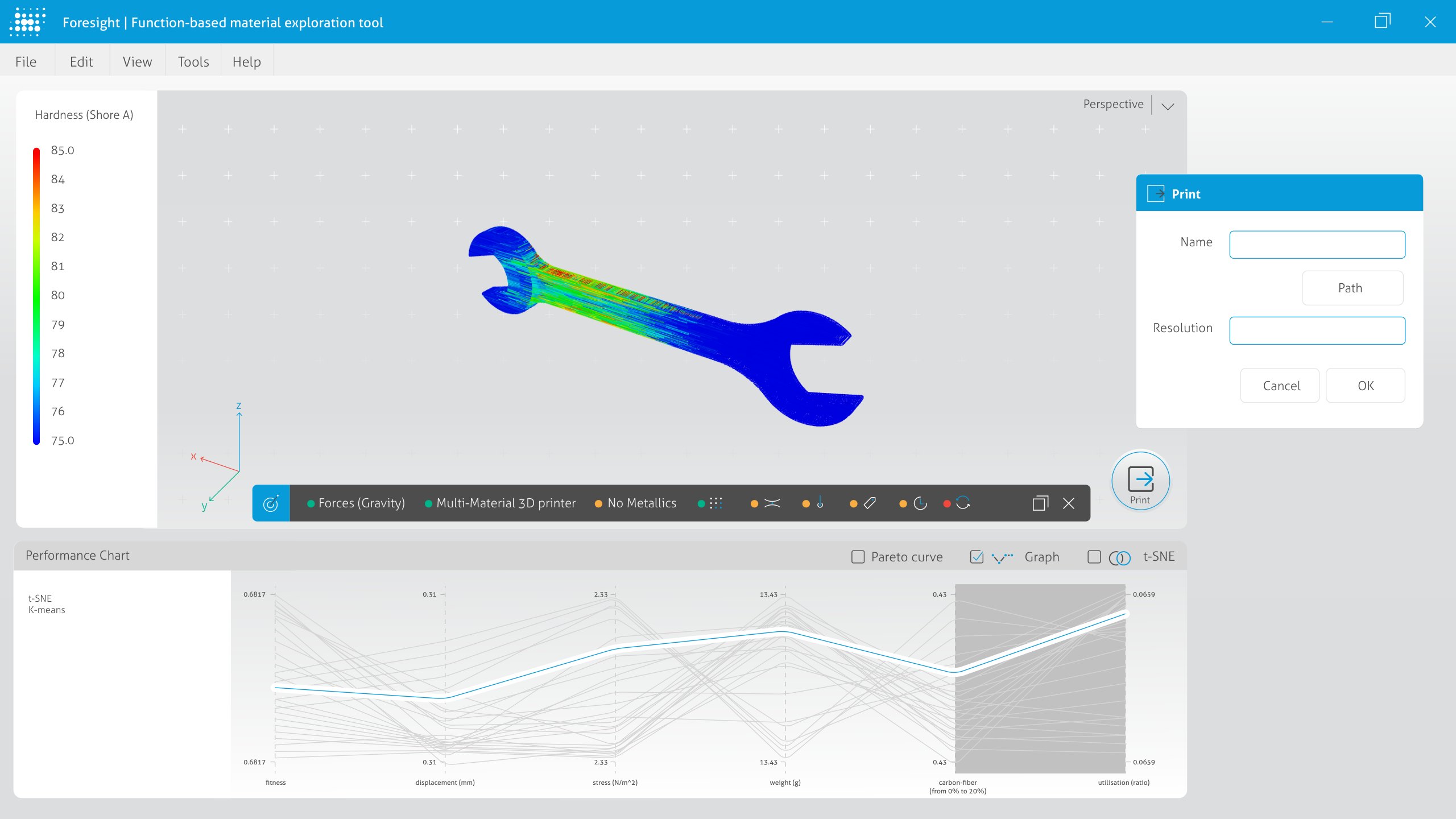
We started with the identity. Additive Flow got a lowercase wordmark with a slanted blue tile of linked dots, and a family system that gave each product its own name and colour while keeping the same mark: flamingo red for Fireflow, copper gold for Formflow and a cool teal for Fuseflow. A palette, type hierarchy and presentation layout followed, so everything the team sent out looked like it came from one company.
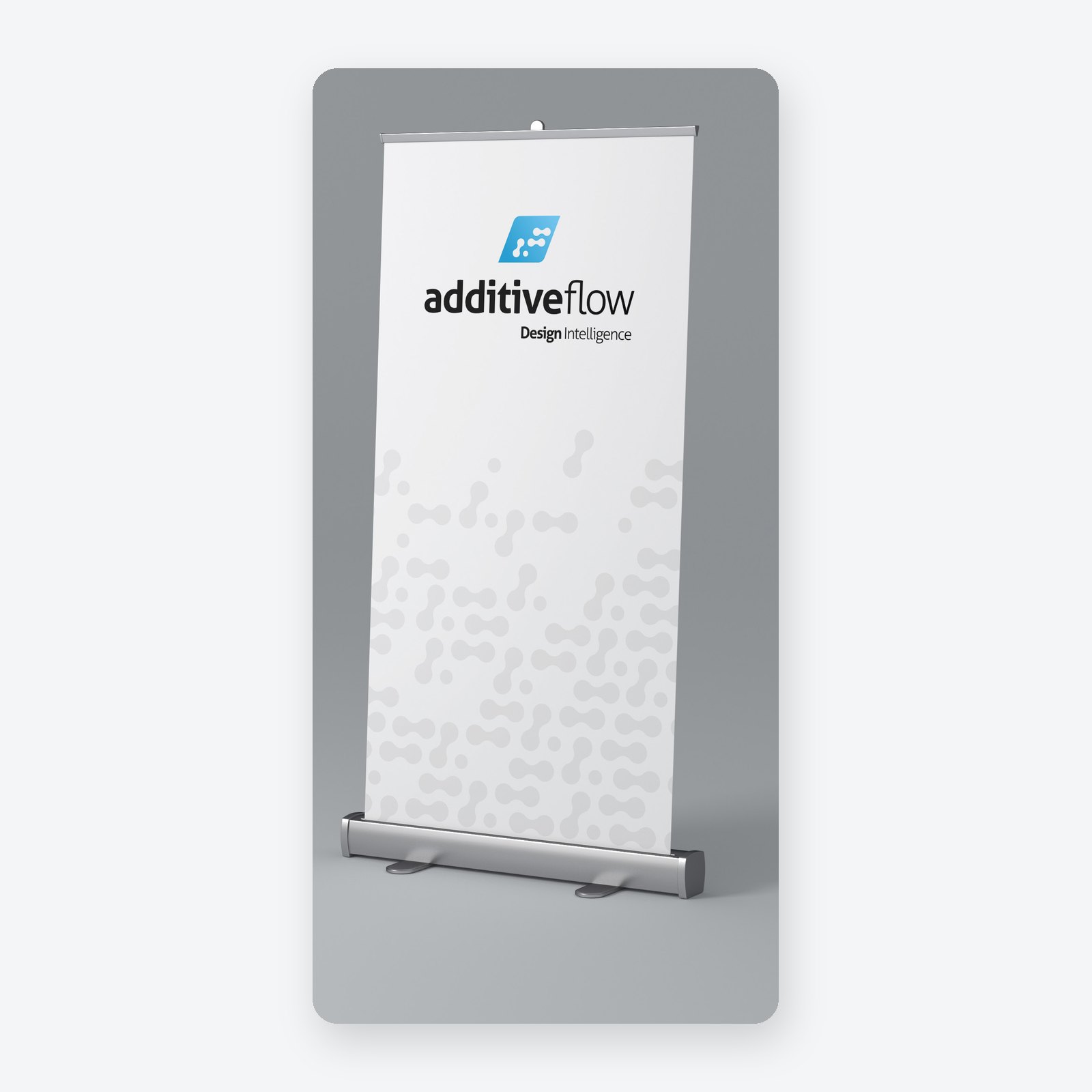
The identity then went onto the things a young deep tech company actually uses: a roller banner carrying the Design Intelligence line and branded T-shirts in black and white.
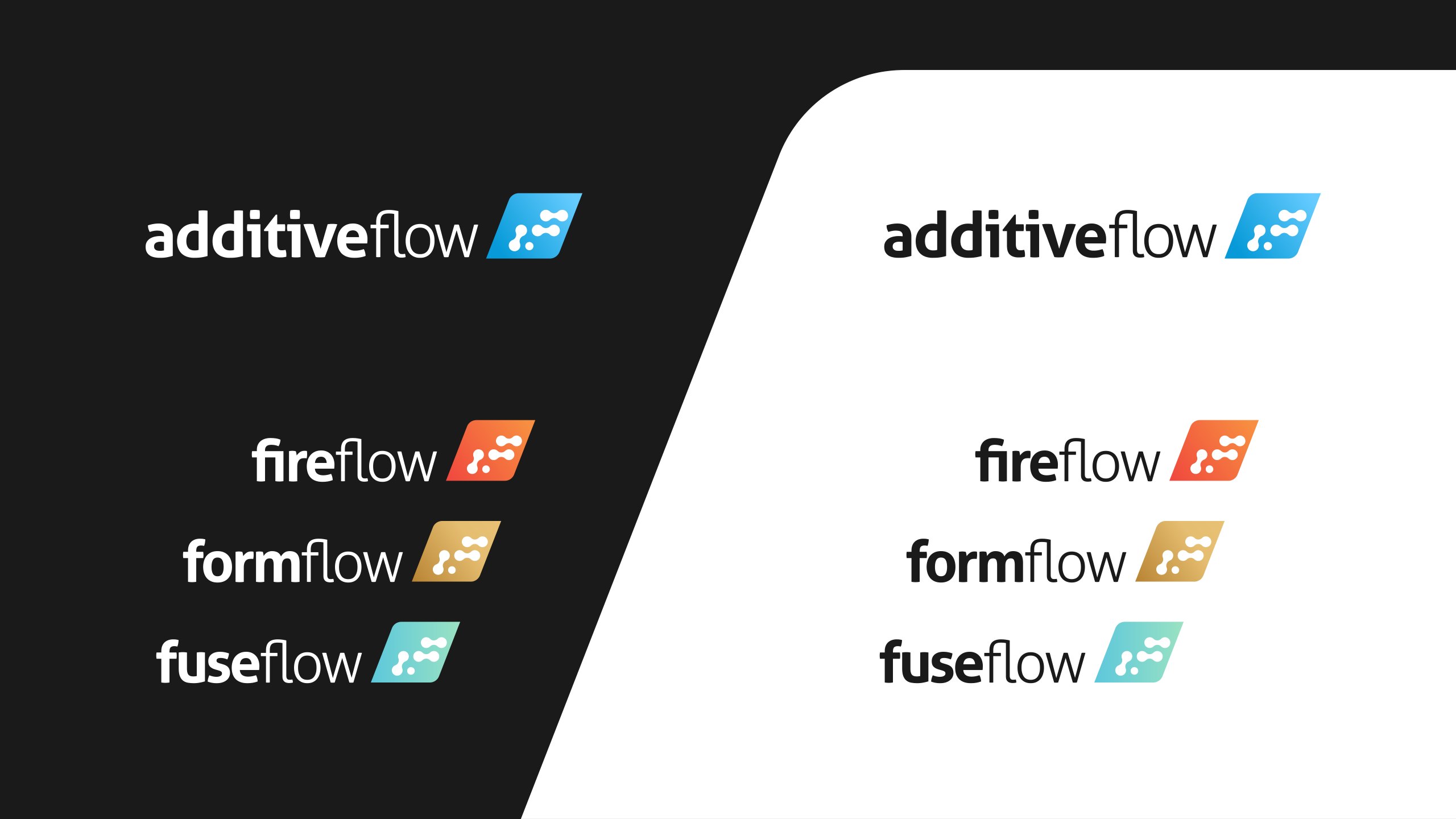
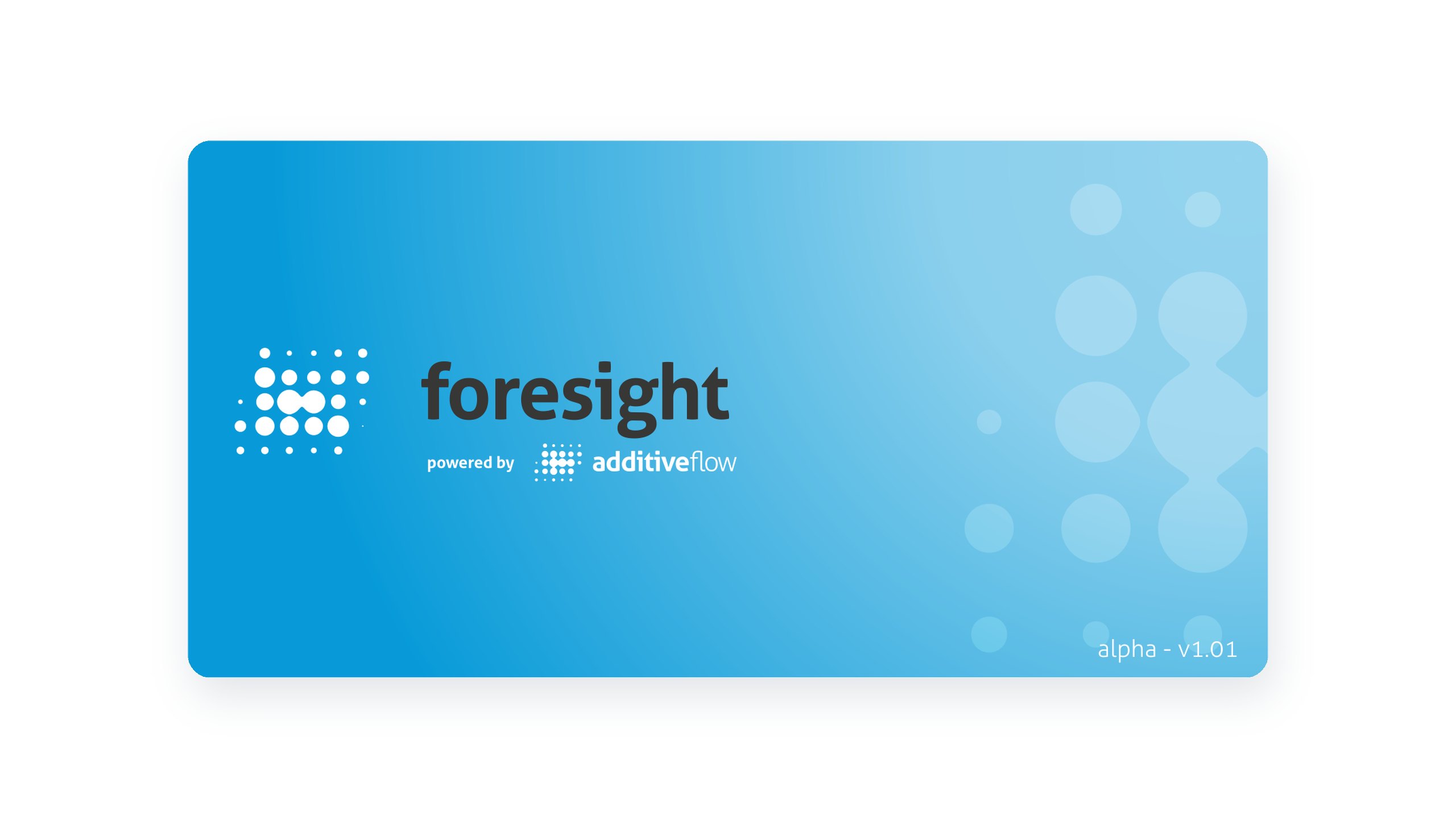
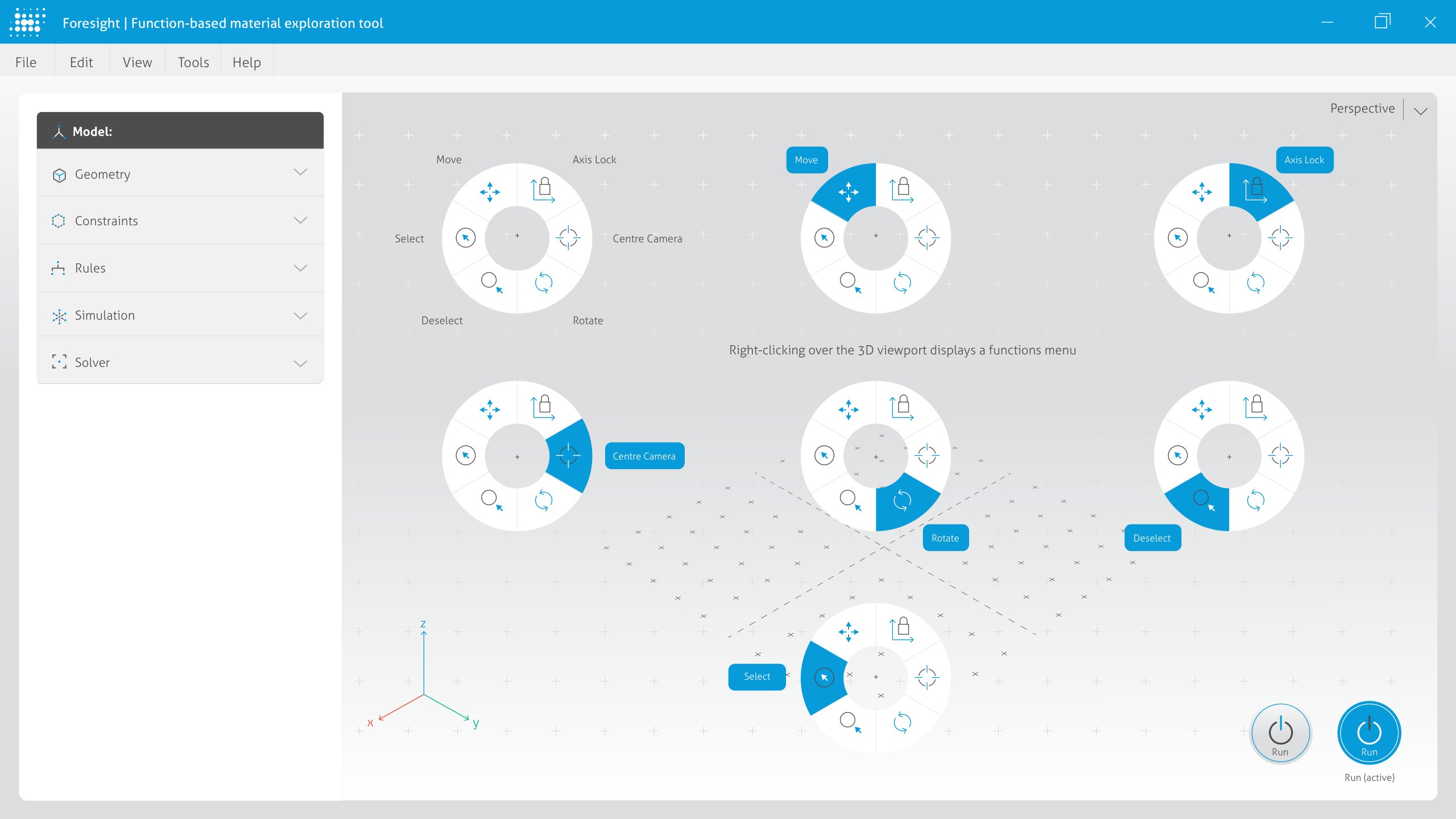
The same clarity had to carry into the software. We designed interface concepts for Foresight, Additive Flow’s function-based material exploration tool, from the splash screen to the working views. A model builder takes engineers through geometry, constraints, rules, simulation and solver in compact panels that open one at a time. A radial menu sits under the right mouse button in the 3D viewport. Design objectives such as cost, time and sustainability sit alongside the physical constraints, and results come back as a colour map across the part, with a performance chart for comparing the trade-offs between solutions.
A short demo video walked through the same idea step by step, from the user uploading a part to the software iterating material combinations and presenting design recommendations.
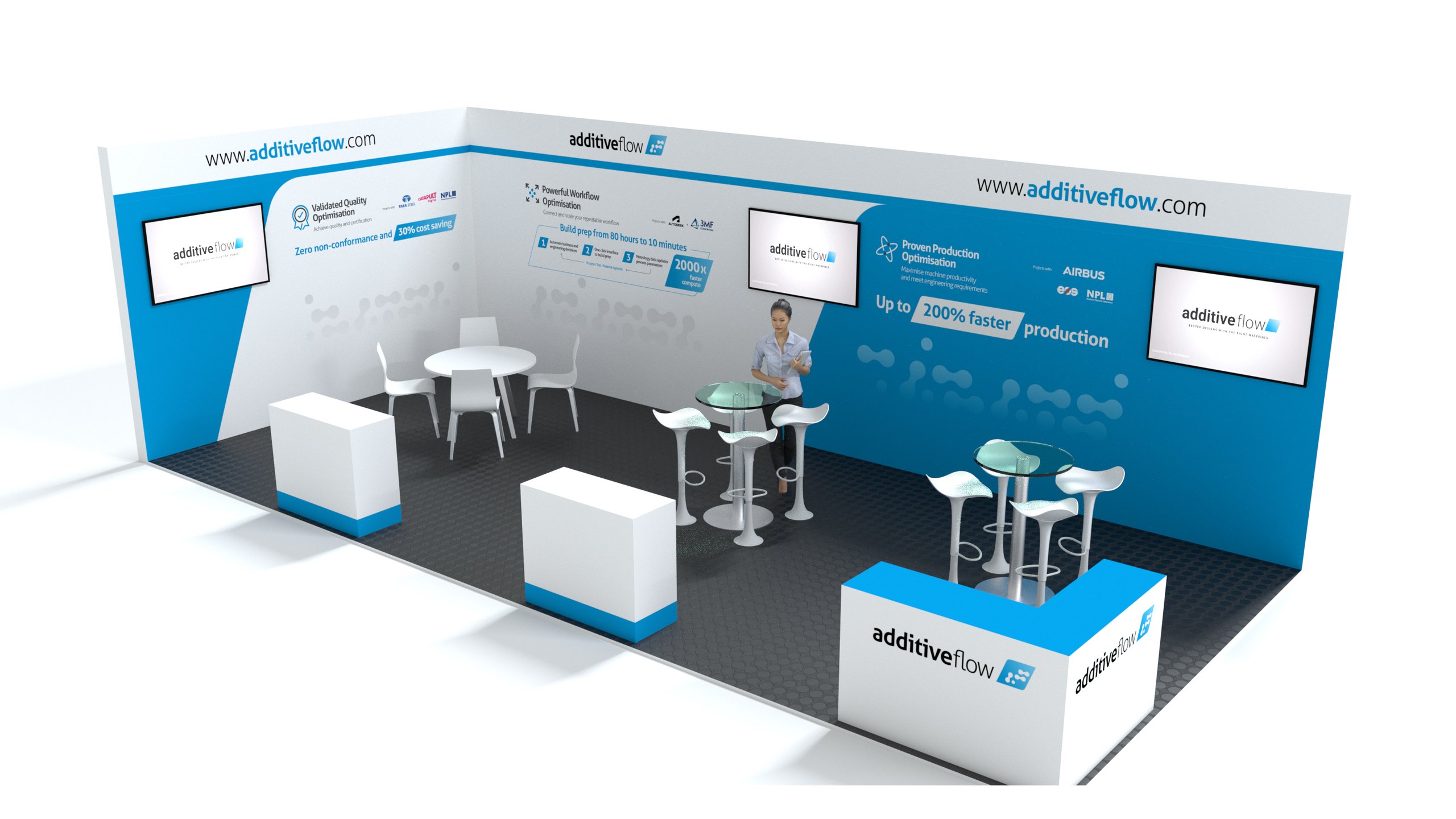
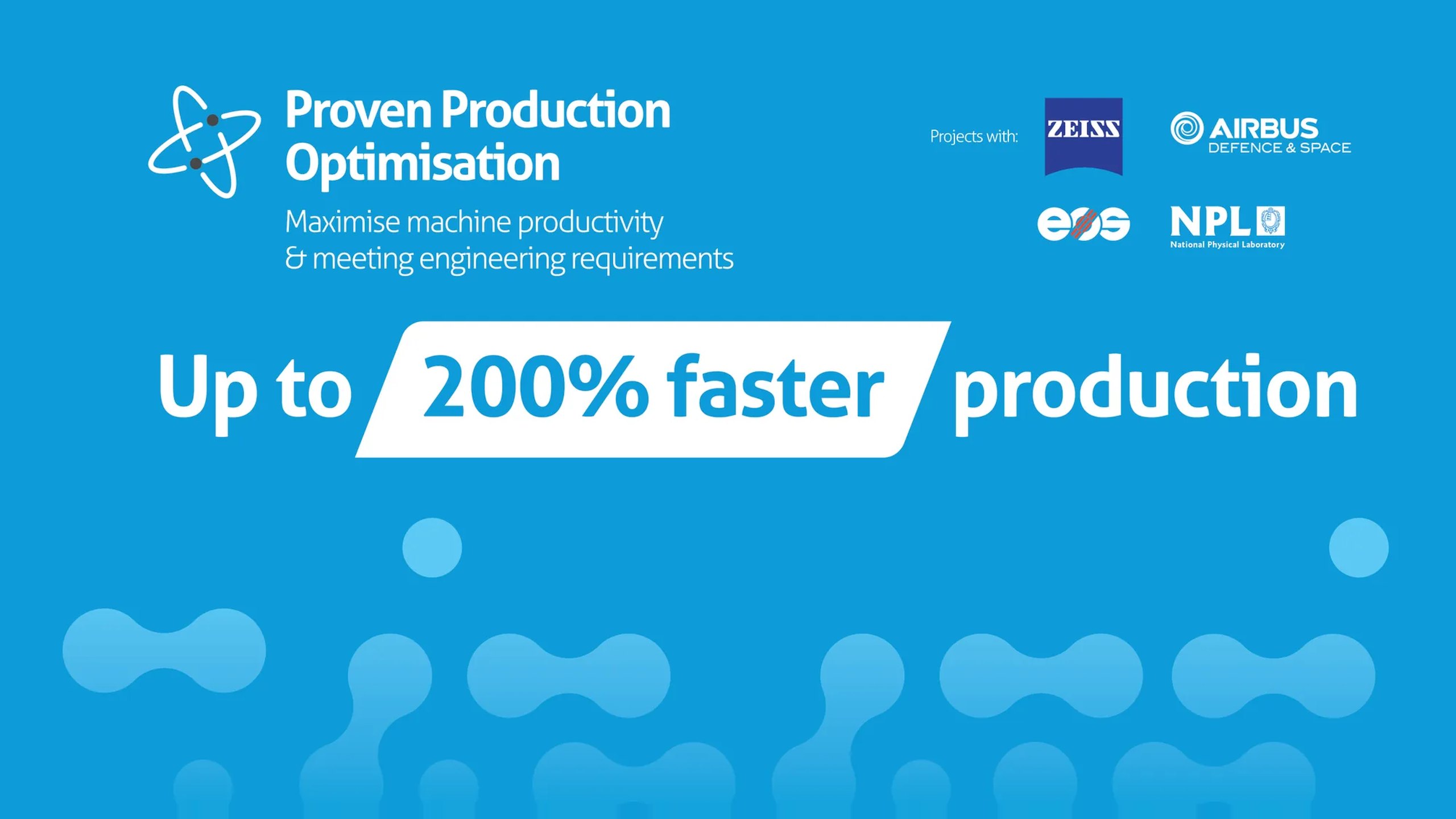
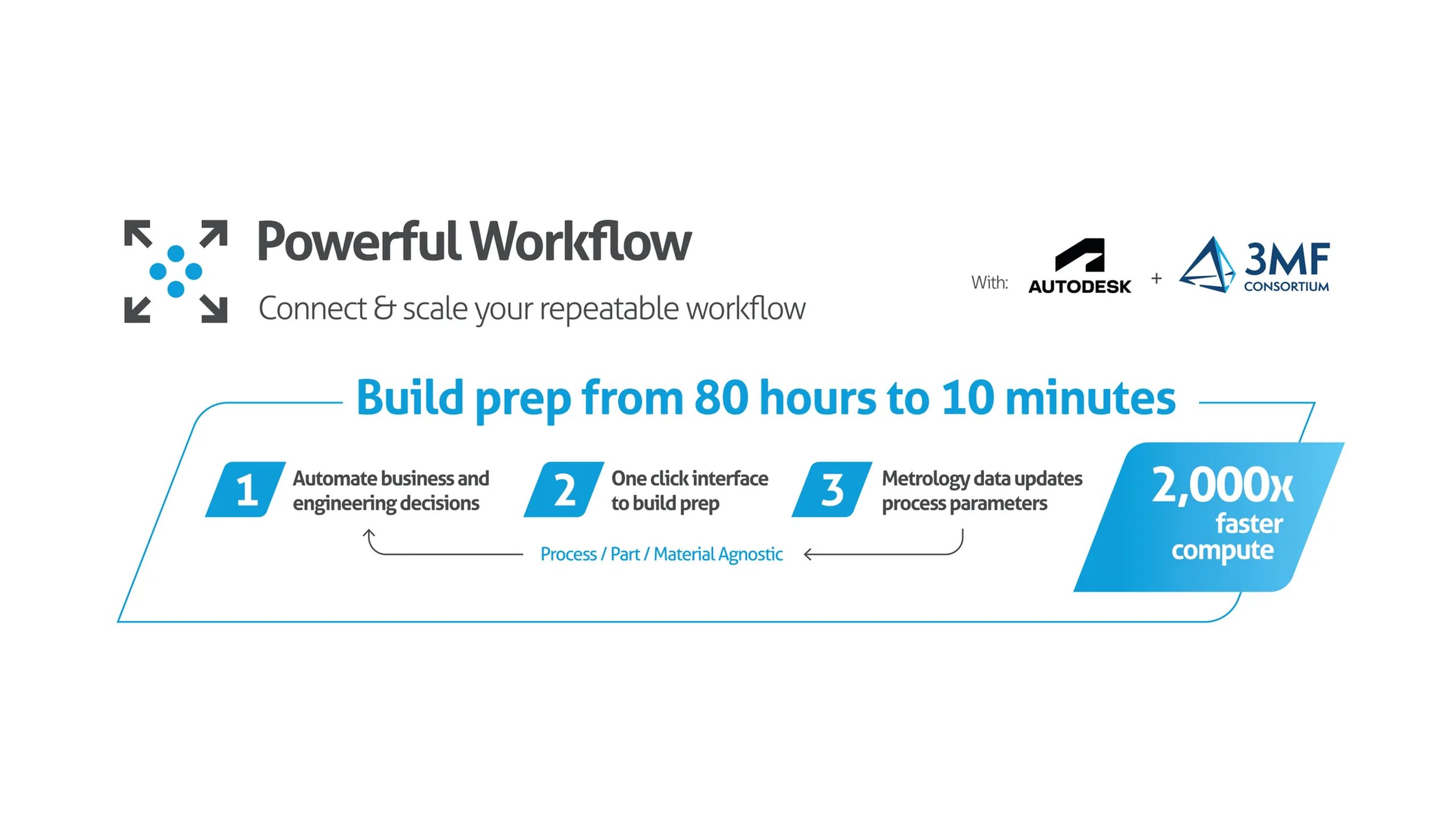
The relationship grew with the company. In 2022 we designed Additive Flow’s stand for the Formnext trade fair, where each wall pairs one plain claim with the partners behind it: validated quality optimisation, a faster build preparation workflow and proven production optimisation.
Nano Dimension acquired Additive Flow in August 2023, and in 2024 we went back to first principles with a Brandscape workshop at our office. It mapped the people the sales team has to convince, from the head of additive manufacturing at a production house, “ambitious and exhausted”, to the national lab scientist who is “standoffish to begin” until the science is shown. The research was blunt: these buyers trust “only what they see with their own eyes”, switch off at “overly salesy language” and see AI as “a dirty word”.
That shaped a tone of voice guide that steers clear of intensifiers and asks for every significant claim to be backed by performance data, and a sales deck that opens with the problems engineers already feel, high costs, difficult implementation and hard qualification, before it shows validated benchmarks. One-pagers for Airbus, a deck for the CDFAM conference, a master deck template and new business cards followed.
Outfly, a London brand, marketing and product agency. We created Additive Flow’s identity and product sub-brands, designed interface concepts for its Foresight material exploration tool, designed its Formnext stand and, in 2024, ran its Brandscape workshop and wrote its tone of voice guide and sales materials.
Lead with the problems they already feel and put evidence before any claim. Additive Flow’s Brandscape research showed its buyers trust only what they see with their own eyes and switch off at salesy language, so its sales deck opens with cost, implementation and qualification pain, then shows validated benchmarks.
We gave Additive Flow one master mark and a family of product sub-brands, Fireflow, Formflow and Fuseflow. Each has its own colour but shares the same slanted tile of linked dots, so the range reads as one company.
It is a multi-objective 3D editor for additive manufacturing. Engineers weight the requirements for a part and the software suggests the production parameters to meet them, balancing process speed, cost, sustainability and performance.