Most organisations run a stack of security tools, each with its own console, and each one can only report on the machines it can see. ThreatAware grew out of a London managed IT services business, and its founders knew the gap that leaves. Their platform connects those tools and cloud systems in one place and shows where protection is missing. In their words, cyber security is broken, and broken things annoy them.
When we met the team in early 2020, they wanted a sharper message and a look to match. It had to speak to IT teams who live with the problem every day, to the leaders who sign off on spend, and to the managed service providers who look after security for their own clients.
We started with a Brandscape workshop with the ThreatAware team in February 2020. It mapped what each audience needed. The IT manager wants fewer consoles to check and proof that the job is done. The chief executive wants a clear, board-level health check without the technical detail. The workshop also captured the founders’ sharpest point: too many companies buy a forensic team before they have put a lock on the door.
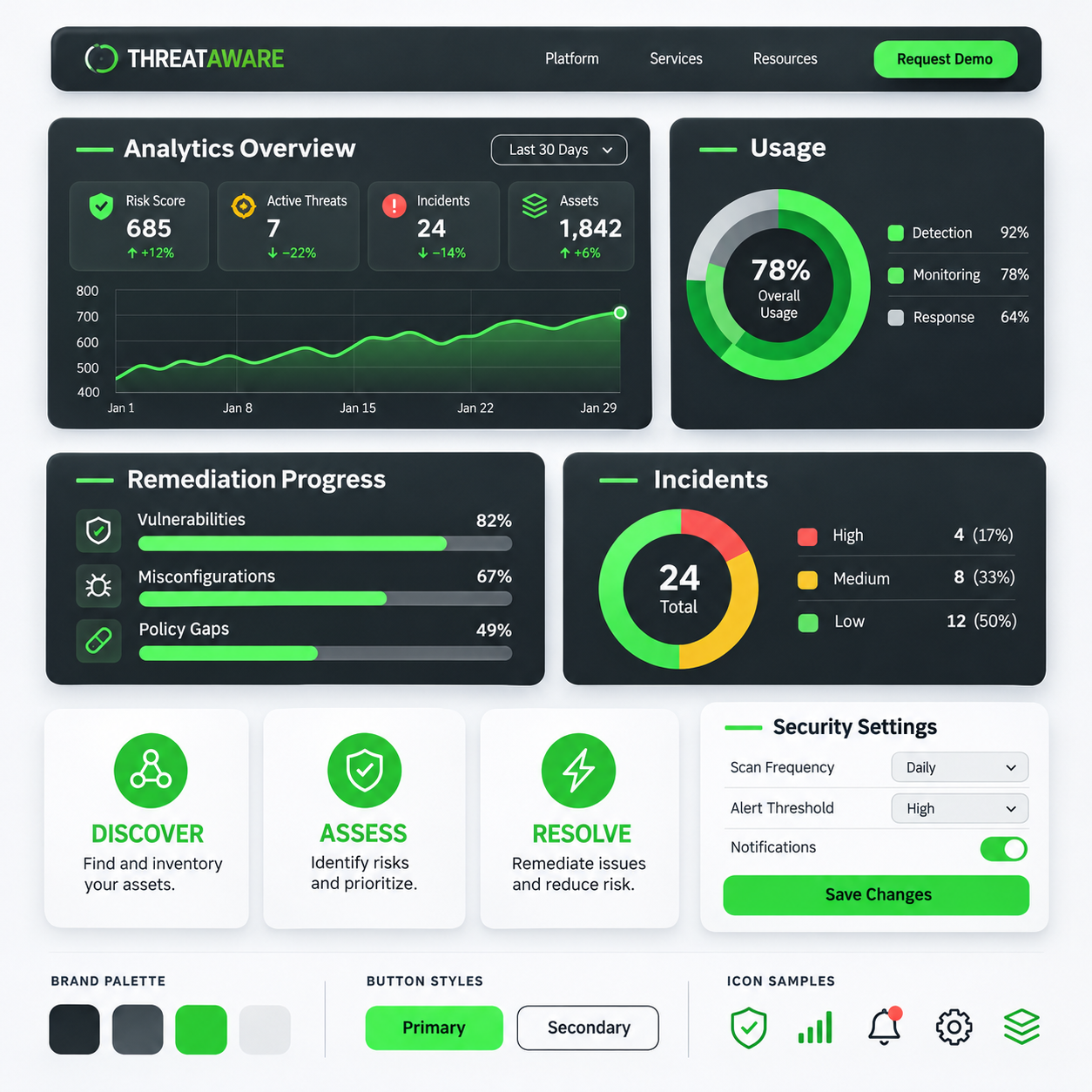
The promise that came out of it was simple: cut through the noise and give organisations peace of mind and time back. We turned that into a brand stylesheet in August 2020, setting the Bahnschrift type family, a palette of deep greys and a bright emerald green with red and orange as highlights, and a set of line icons. We then built a sales deck on it, and carried the look onto ThreatAware’s social profiles.
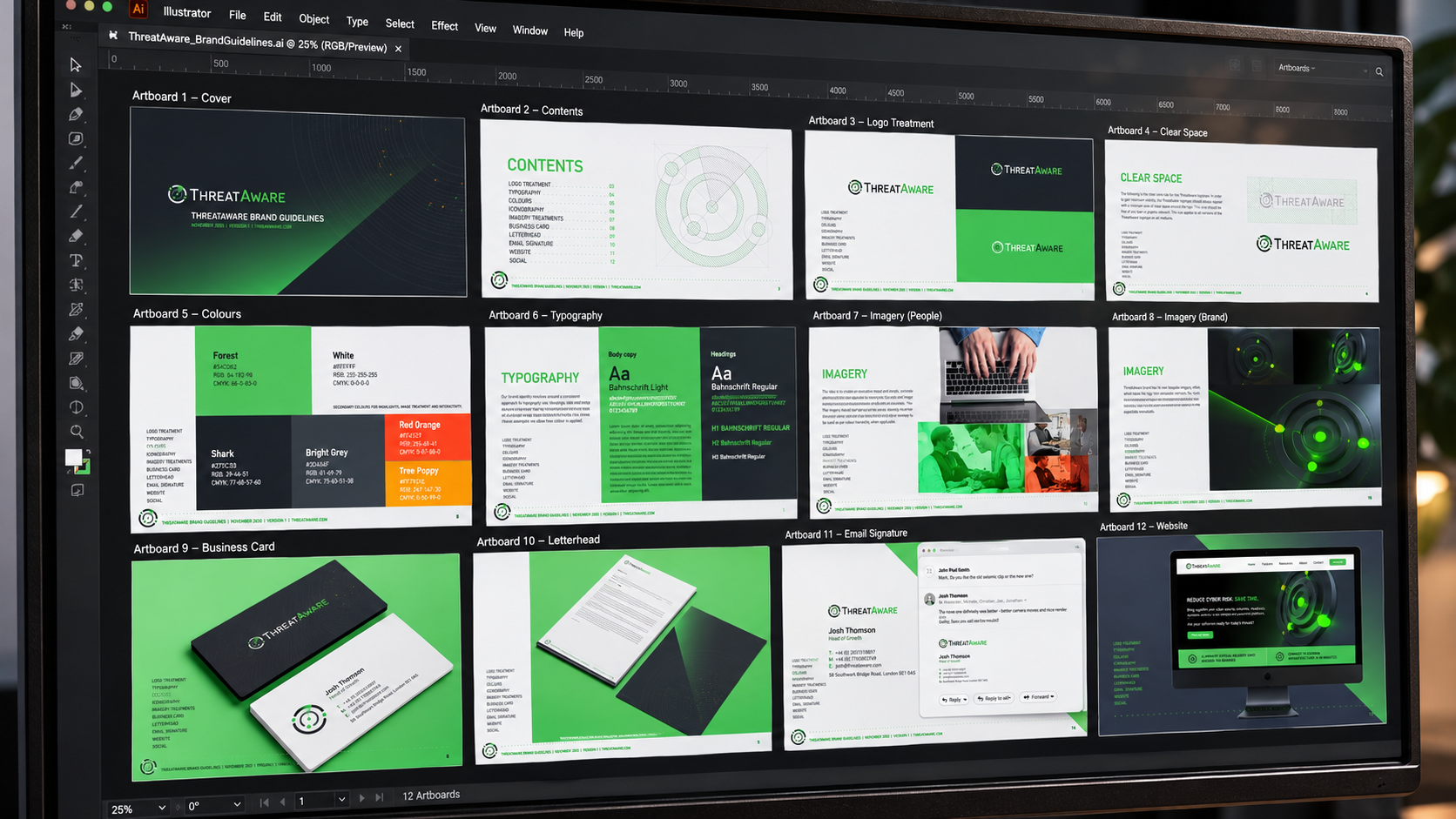
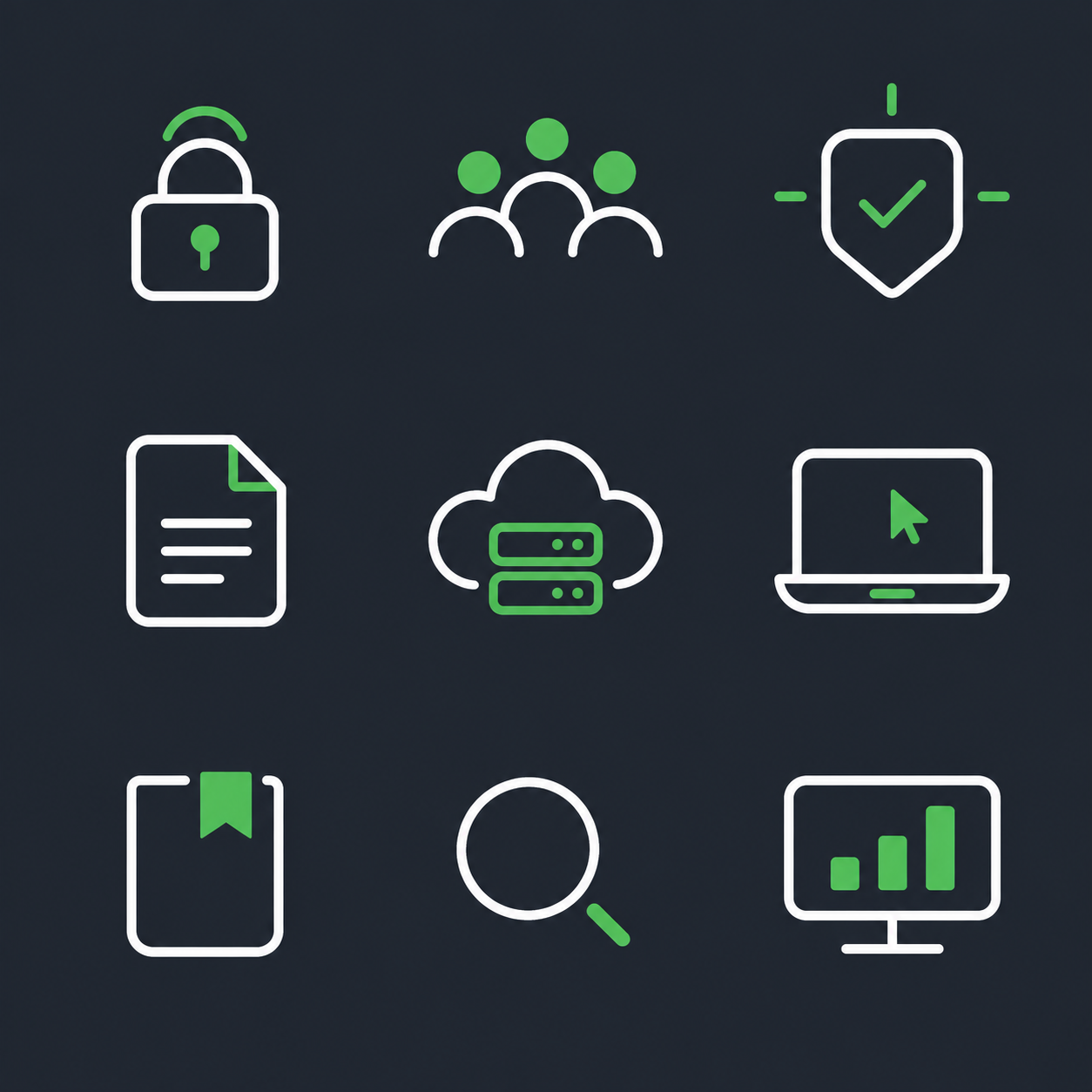
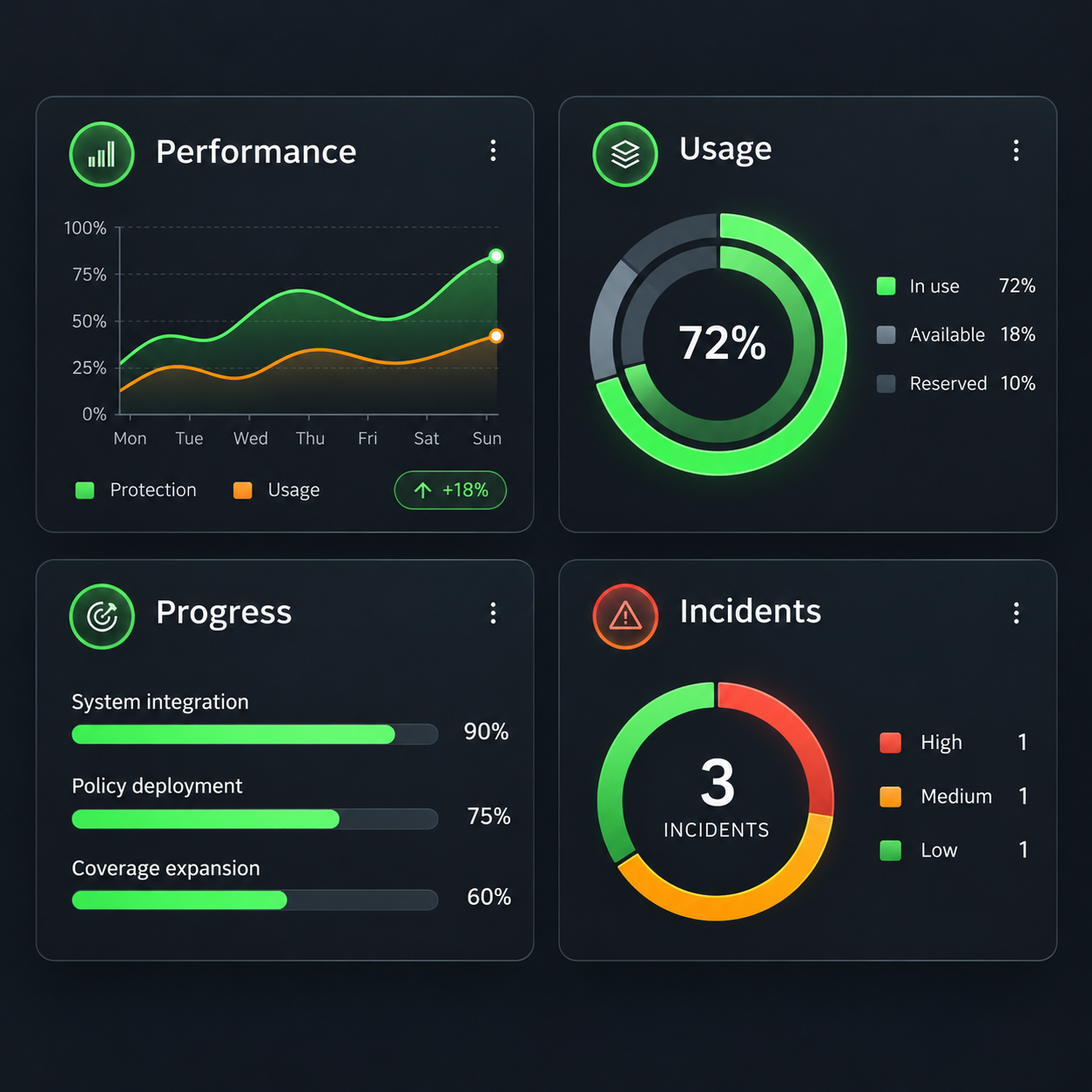
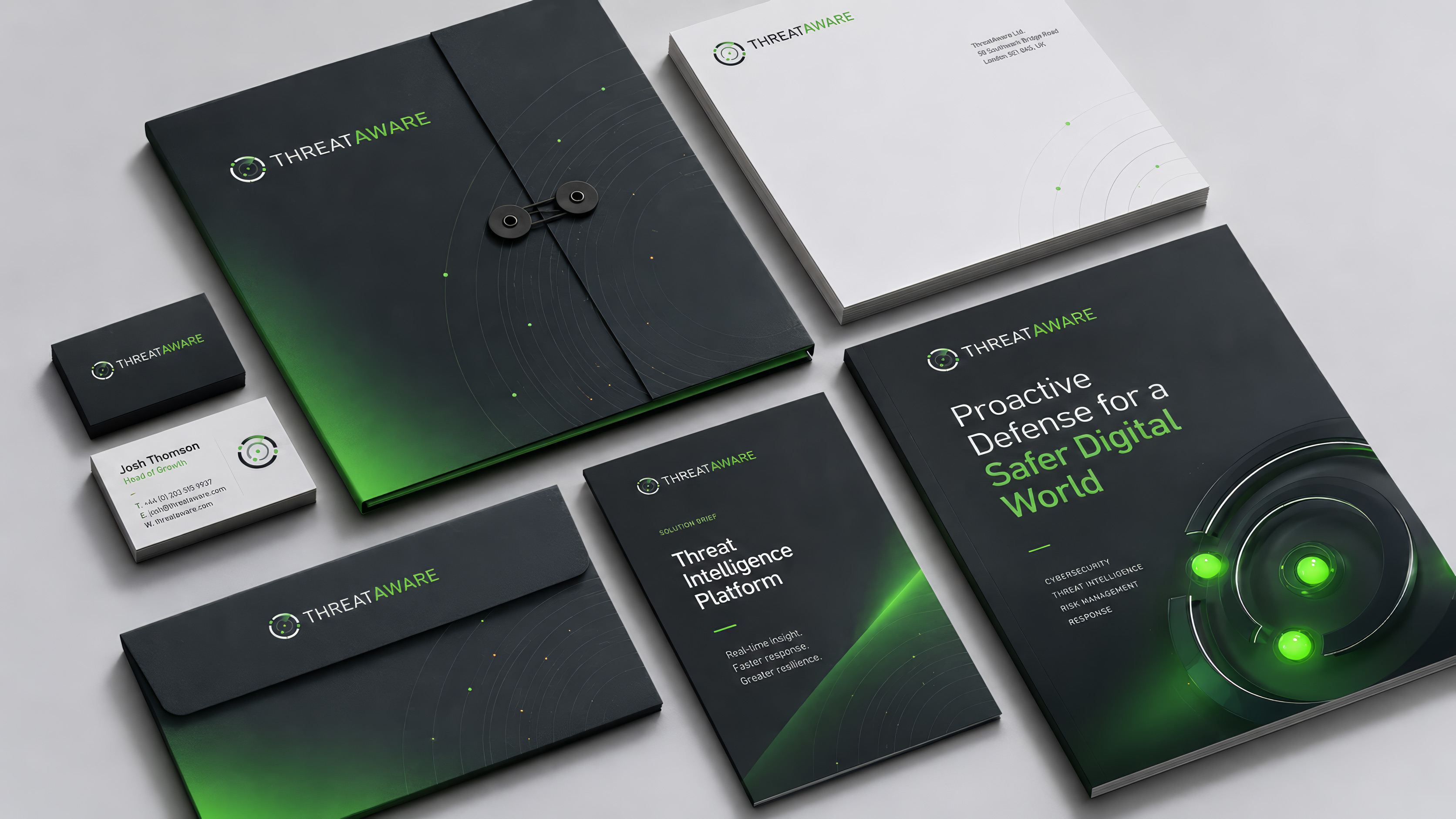
In November 2020 we delivered ThreatAware’s brand guidelines. They cover logo treatment, typography, colour, bespoke icons drawn in the same language as the logo, imagery treatments and the everyday touchpoints, from business cards, letterhead and email signatures to the website and social profiles.
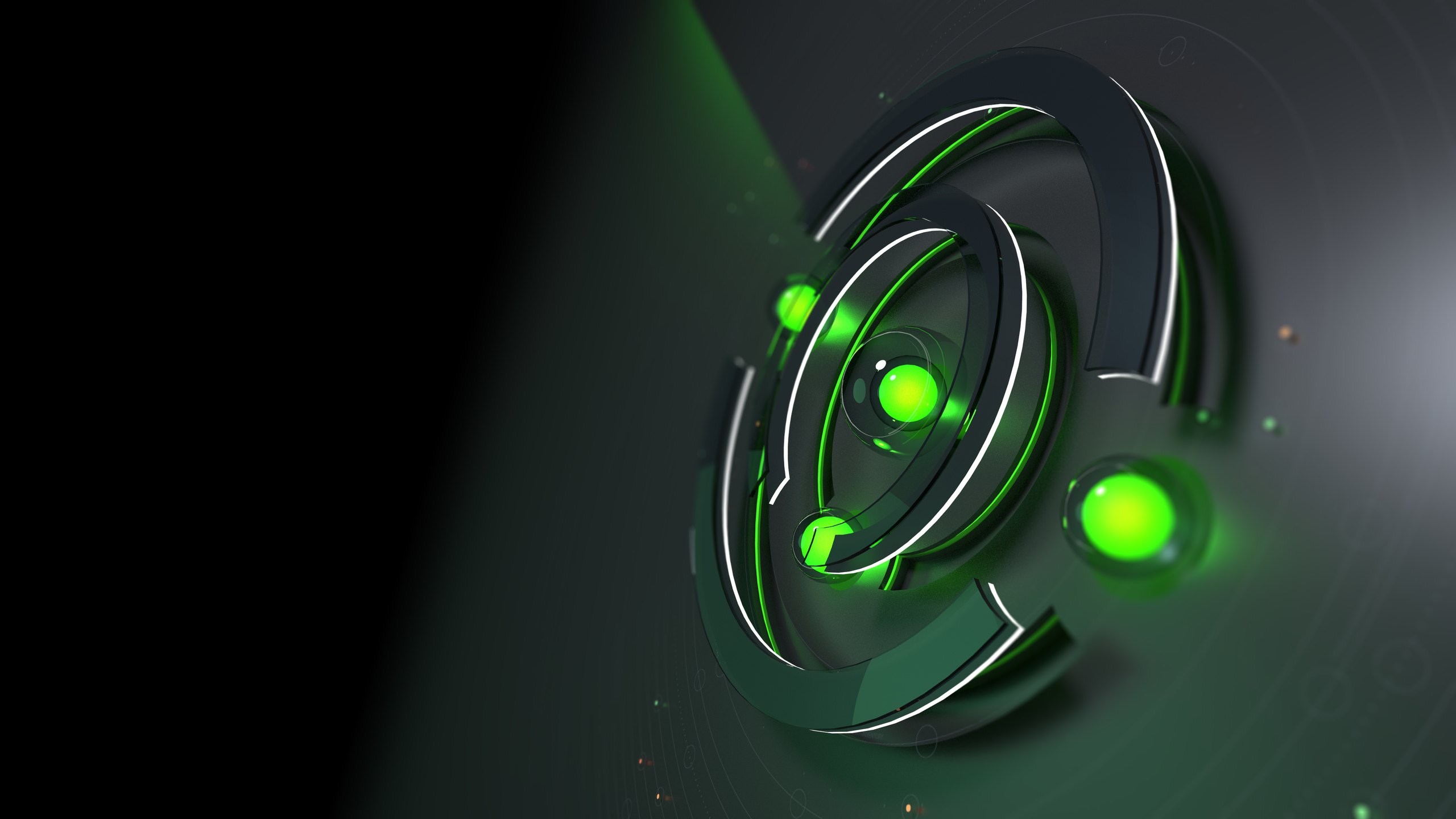
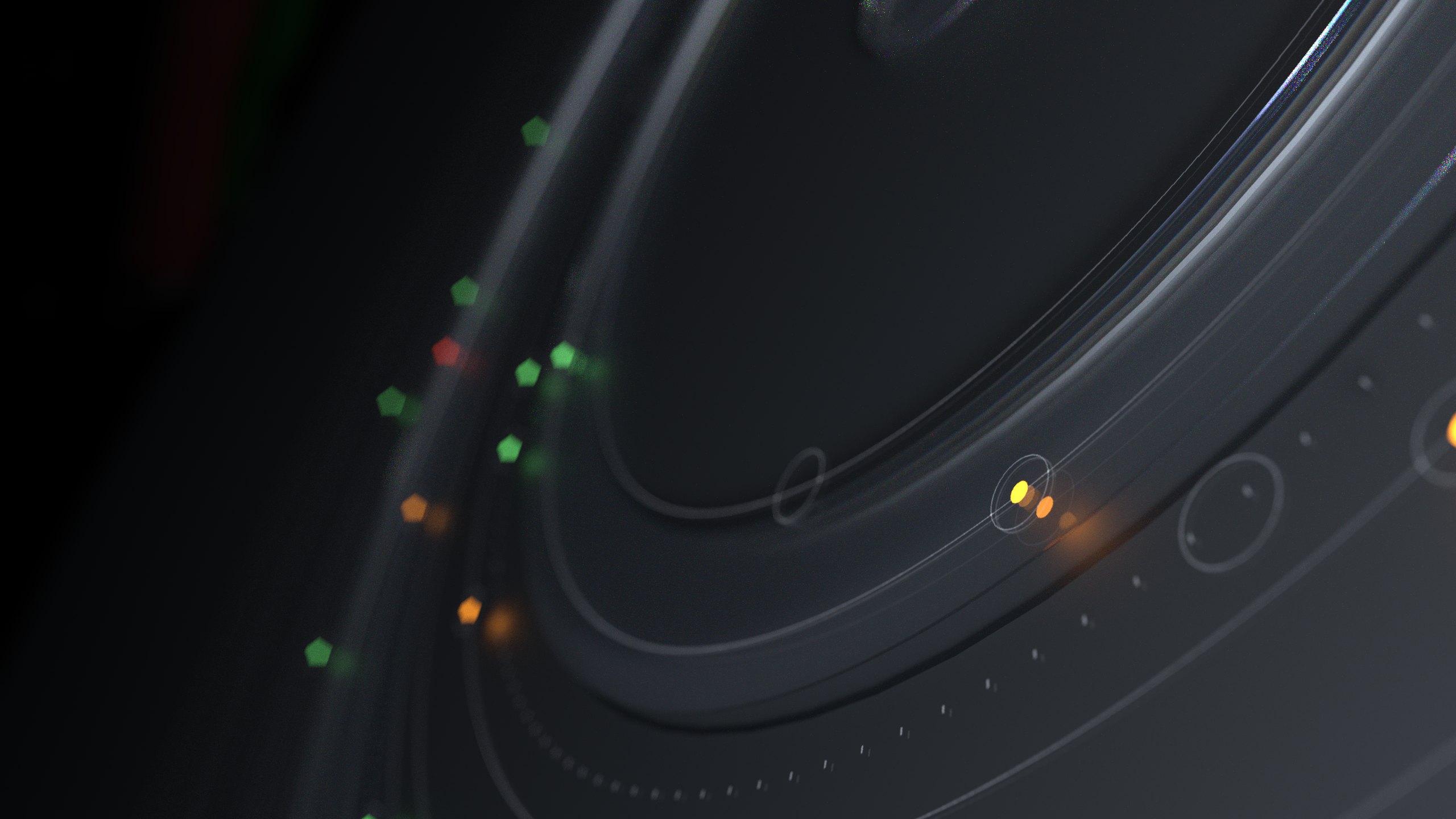
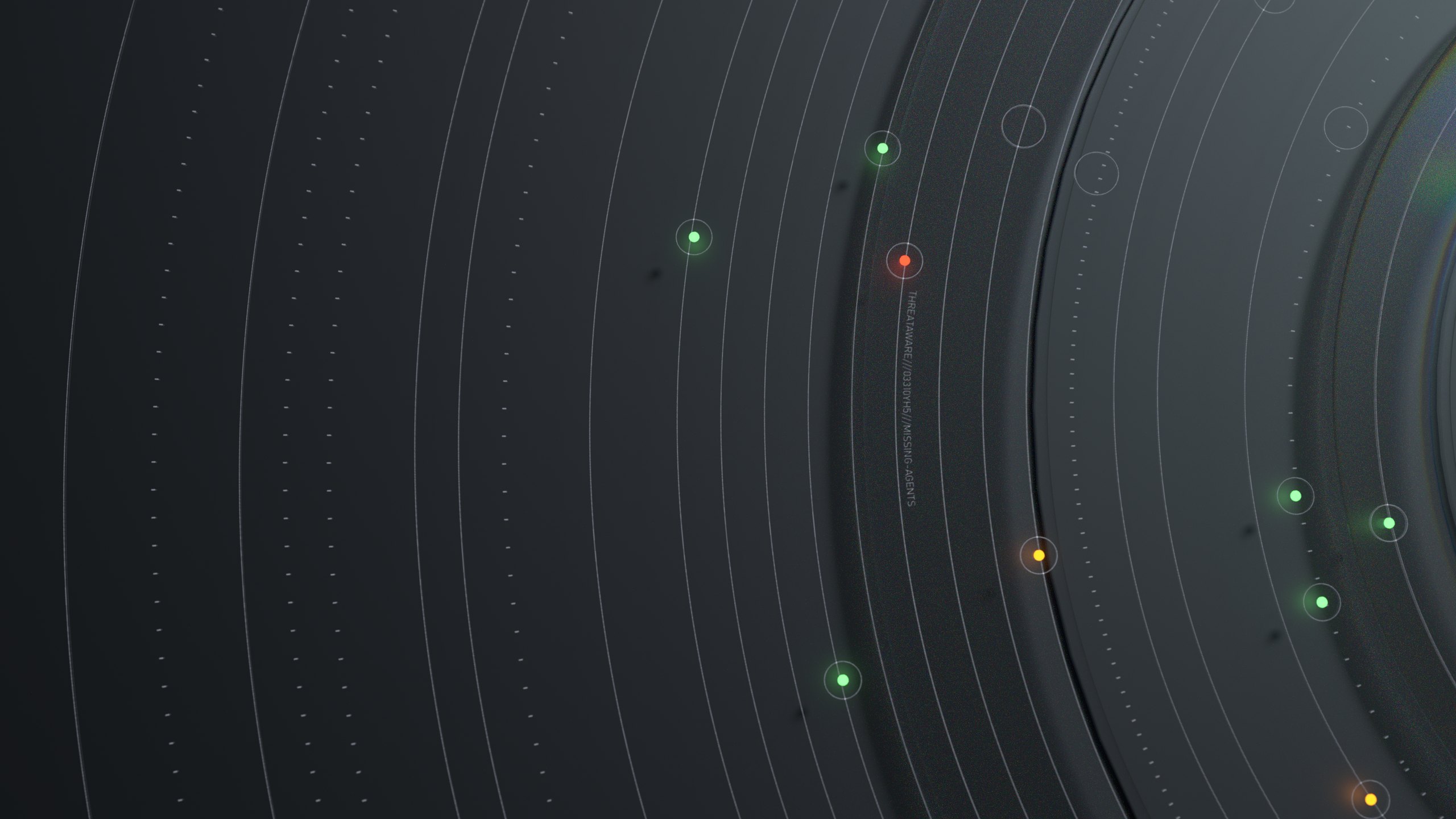
The centrepiece is a 3D world built from the logo itself, its rings and glowing nodes rendered in dark metal and green light. We used it to design a website update in December 2020, with a 3D render leading the homepage and an animated version for the hero. It also gave ThreatAware its own imagery for title slides, banners and anything else the team needed to make.
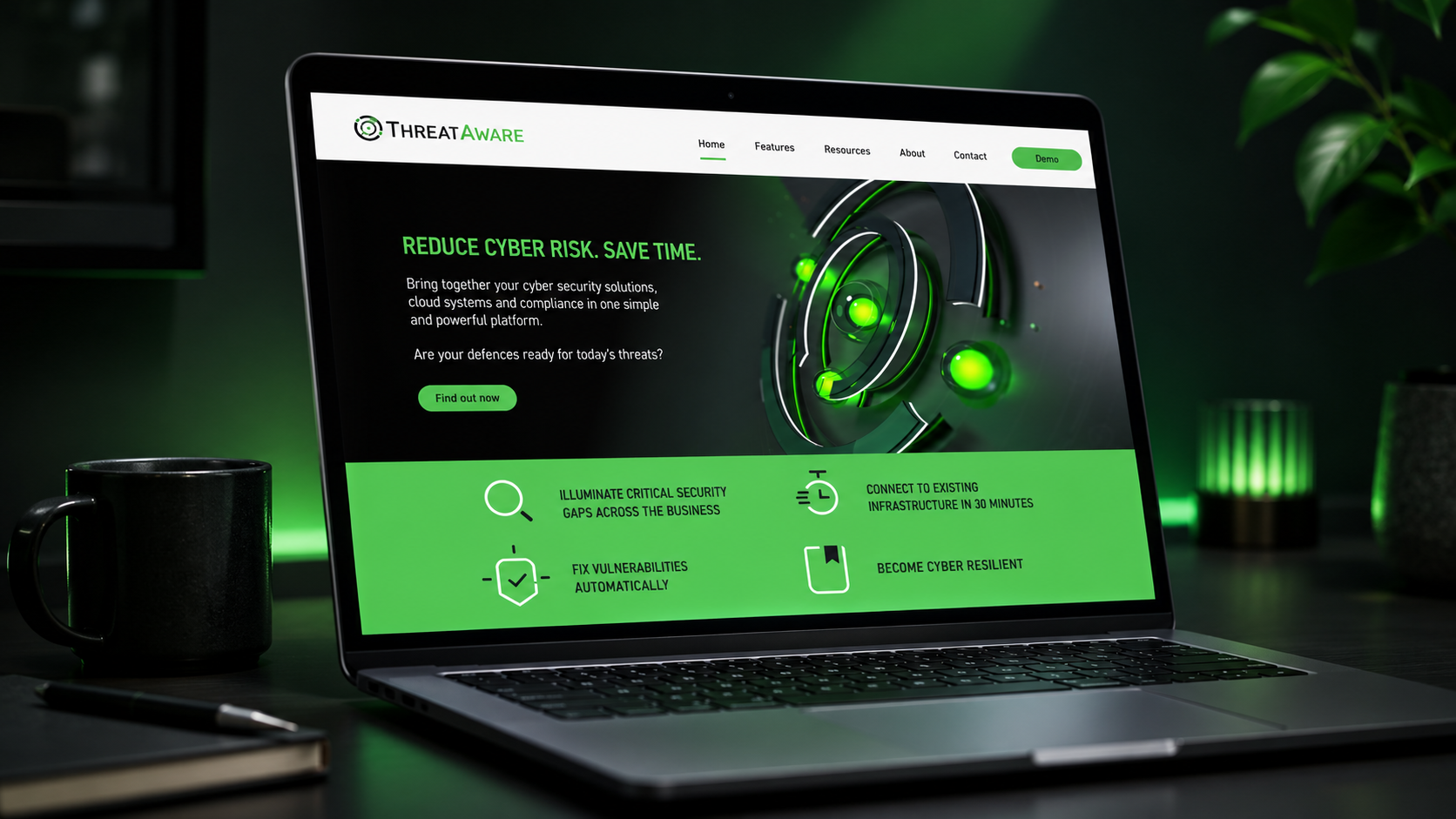
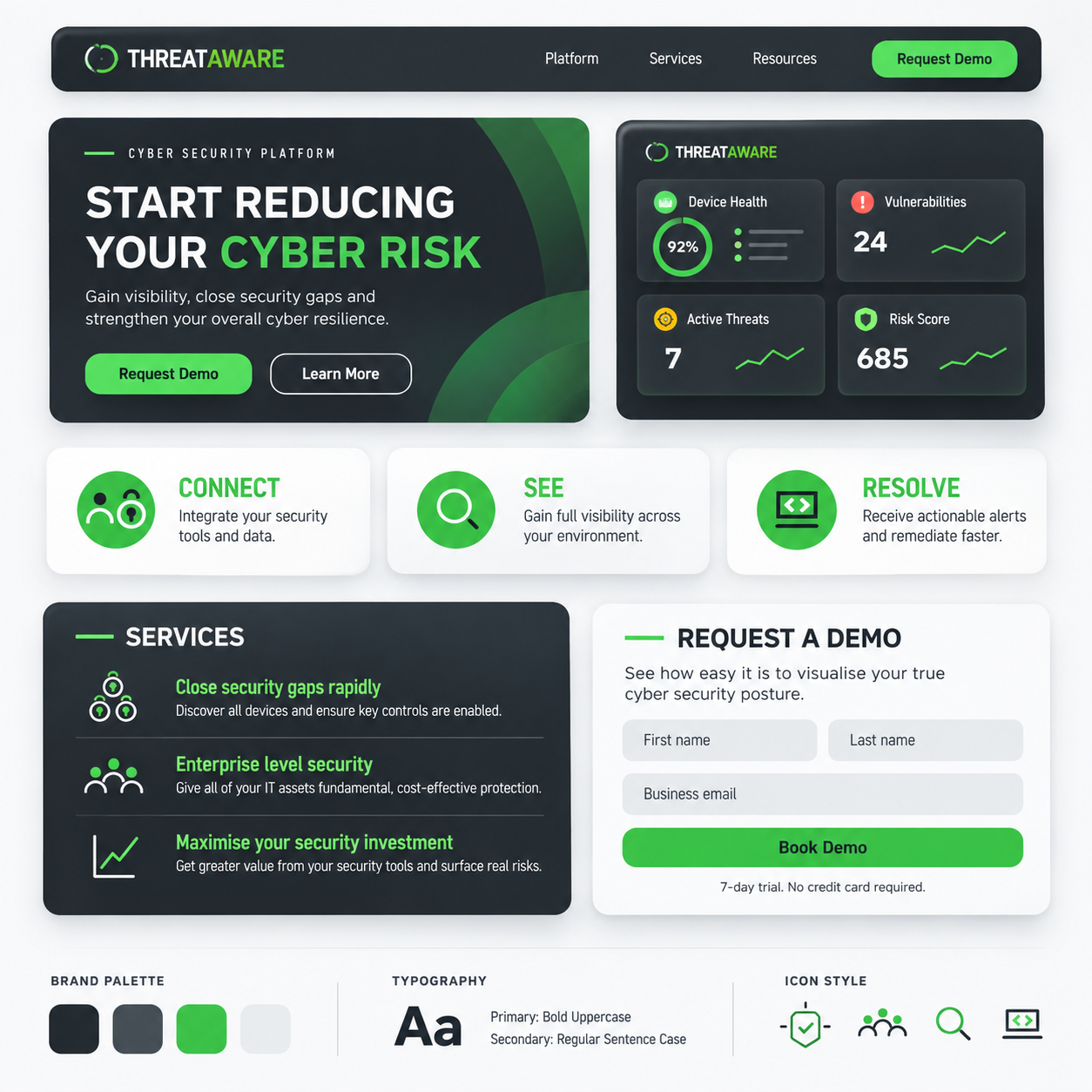
It looks absolutely fantastic and all of our team couldn’t be happier with the result. I know a huge amount has gone into this in a very short period of time and it really has paid off. I think this is going to be nothing short of utterly transformative to the deals that we are moving along.
Josh Thomson, Head of Growth, ThreatAware
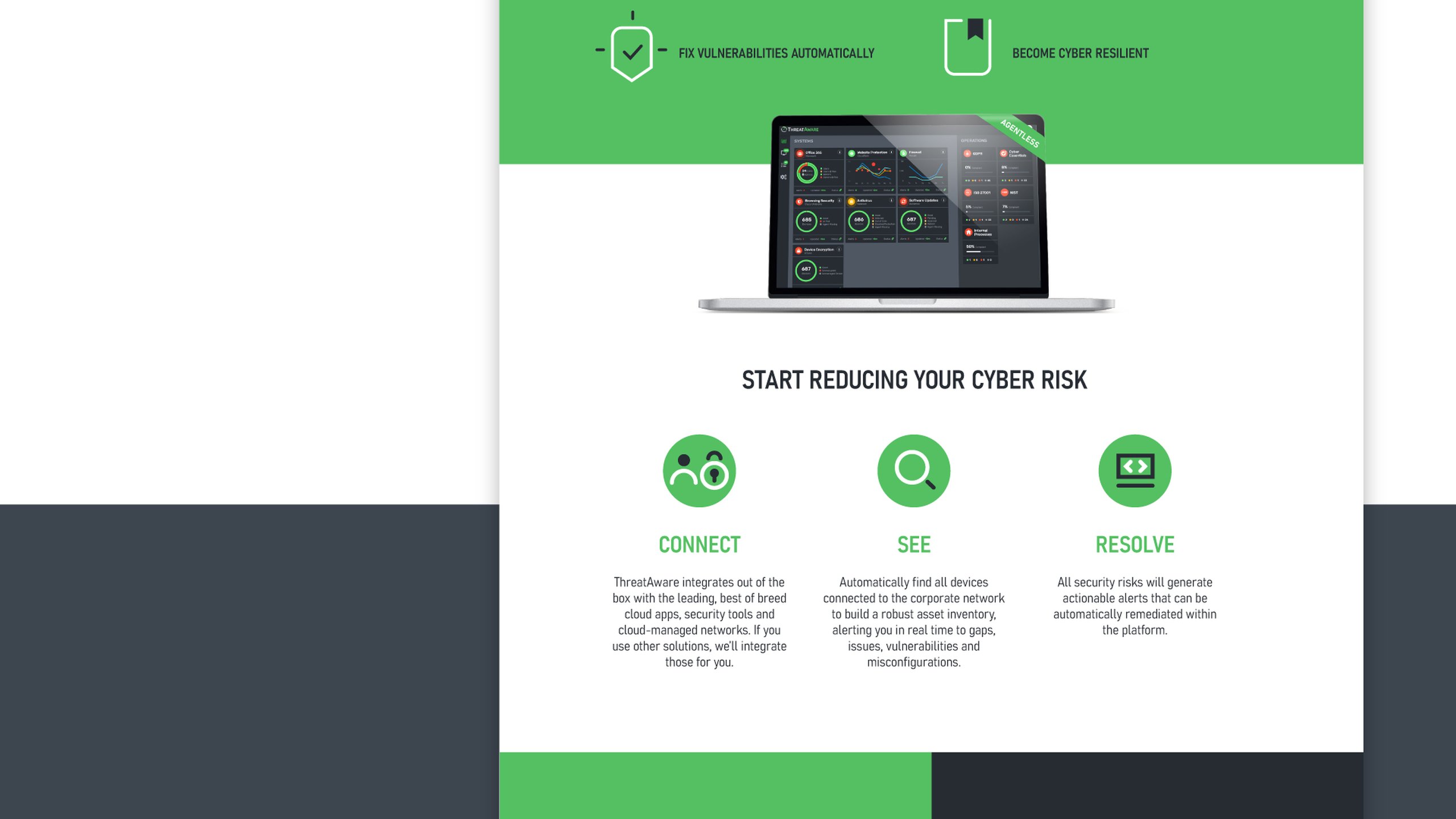
The partnership carried on into 2022. We polished ThreatAware’s sales deck, created a new series of 3D brand renders that take the logo’s orbiting rings and nodes into wider, more atmospheric scenes, and designed the layout of its order form and terms.
In September 2022 we gathered the whole brand into a shared library for the ThreatAware team: the logo suite, 2D and 3D imagery, the web stylesheet and the brand guidelines, ready for whatever they make next.


Outfly, a London brand, marketing and product agency. We ran ThreatAware’s Brandscape workshop in 2020, then created its brand stylesheet, sales deck, brand guidelines, 3D imagery and a website design, with more design work for the team in 2022.
ThreatAware connects an organisation’s security tools and cloud systems in one platform. It finds the devices accessing company data, shows where protection is missing and turns each gap into an alert the IT team can act on.
Lead with clarity and peace of mind instead of fear. For ThreatAware we set a palette of deep greys with one bright green, clean Bahnschrift type and 3D imagery that turns the logo’s rings and glowing nodes into a precise, quiet world.
Logo treatment, Bahnschrift typography, the colour palette, bespoke icons drawn in the logo’s design language, imagery treatments and 3D imagery, plus business cards, letterhead, email signatures, the website and social profiles.