Crypto Quantique works on security for internet-connected devices. In 2021 it had just updated its messaging and published a new website, but it wasn’t doing much to drive the right people there. The brief was simple: relevant website traffic, and leads.
The right people are hard to reach. Crypto Quantique’s main buyers are the security designers, architects and product managers at companies building connected devices, in sectors such as automotive, telecoms, medical devices and consumer electronics, with semiconductor companies as a second audience. They don’t click on IoT security ads out of curiosity. They click when something helps with a problem that is already on their desk, like a new standard or a piece of legislation they will have to meet.
The campaign was funded through the LORCA Ignite programme, and Crypto Quantique wanted to test before it scaled: put a small budget behind each channel first, set benchmarks, then spend where the numbers were good.
We started with the audience. Working from Crypto Quantique’s brief, we translated its buyer personas into LinkedIn targeting: the industries to reach, the job titles that hold security and product decisions, and the companies whose people we wanted in front of the ads. We left out functions that are mostly entry level, so the budget went on people with a say in what gets bought.
Then we gave them a reason to engage. On LinkedIn, lead generation forms offered Crypto Quantique’s white papers on IoT security standards and legislation. On Google, long-tail search ads around IoT security, cryptography and device and identity management sent people to an in-depth guide on how to scale IoT security.
We ran the campaign in two halves: four weeks of testing to set real benchmarks for cost per lead, then four weeks on a higher budget, later targeting the US, UK, Germany, Italy and France. Every ad was designed in both square and landscape formats so we could A/B test sizes.

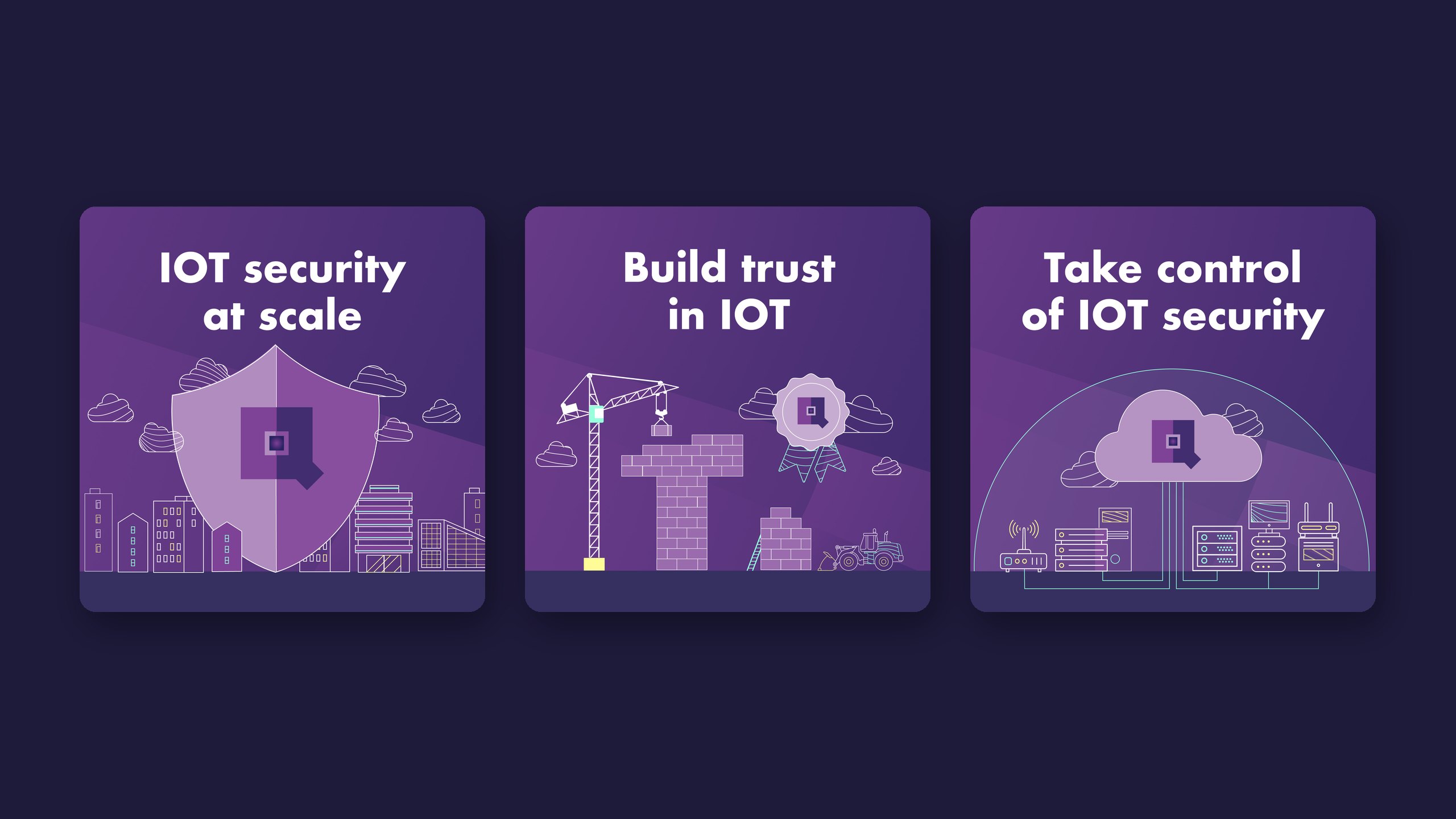
The ads had to stop a technical audience in a busy feed without overselling. We designed a set of campaign ads in a deep purple palette, each pairing one short promise with a simple scene: a shield over a city for IoT security at scale, a crane and rising brickwork for build trust in IoT, and a protective dome over connected devices for take control of IoT security. Crypto Quantique’s mark sits at the centre of every one.
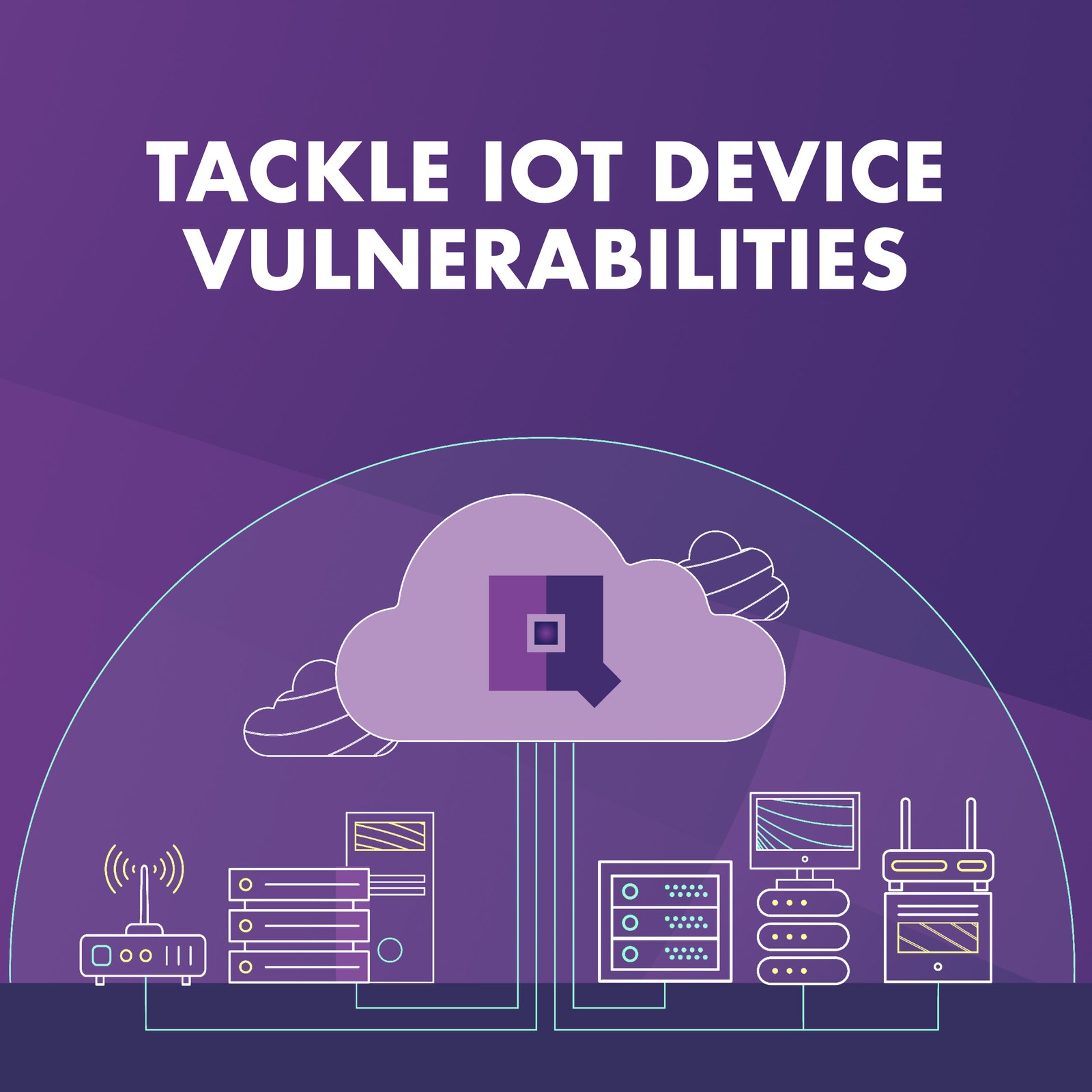
Alongside the core set we designed further headline variants built on new keyword ideas, from manage IoT device security to tackle IoT device vulnerabilities. We also wrote the LinkedIn ad copy and the Google search ad headlines and descriptions, and closed the campaign with a full report that broke results down by platform.

On a total spend of £4,884.06 across LinkedIn and Google, the campaign delivered 210,050 impressions, 2,183 link clicks and 60 leads, 24 of them rated high quality. The cost per lead was £66.66, below LinkedIn’s benchmark of £80 to £100 for similar industries. The standards white papers brought in 32 leads at £61.04 each and the legislation white paper 28 at £73.06. On Google, clicks cost an average of £0.51, against a Google Ads benchmark of $2.41.
The report was just as clear about what didn’t work. Until we began targeting the US separately on 14 October, leads cost £38.77 each. After that, engagement in the region was lower and the cost per lead rose to £122.43. And while Google sent 1,715 visits to the website, none of them turned into a lead. That shaped our recommendations for what came next: improve the design and calls to action on key landing pages, build nurture material such as email sequences and information packs, set up a marketing CRM to deliver it, and add customer video case studies.
Outfly, a London brand, marketing and product agency. In autumn 2021, as part of the LORCA Ignite programme, Outfly planned, designed and managed an eight week LinkedIn and Google Ads campaign for Crypto Quantique, from audience targeting and ad creative to the final campaign report.
60 leads, 24 of them rated high quality, from 210,050 impressions and 2,183 link clicks on a total spend of £4,884.06. The cost per lead was £66.66, below LinkedIn’s benchmark of £80 to £100 for similar industries.
Offer buyers something that helps with a problem they already have. For Crypto Quantique, white papers on IoT security standards and legislation, promoted through LinkedIn lead forms to security and product decision-makers at device manufacturers, brought in 60 leads.
Google sent 1,715 visits to the website but none became a lead, so Outfly recommended improving the design, UX and calls to action of key landing pages, building nurture material such as email sequences and information packs, setting up a marketing CRM to deliver it, and adding customer video case studies.